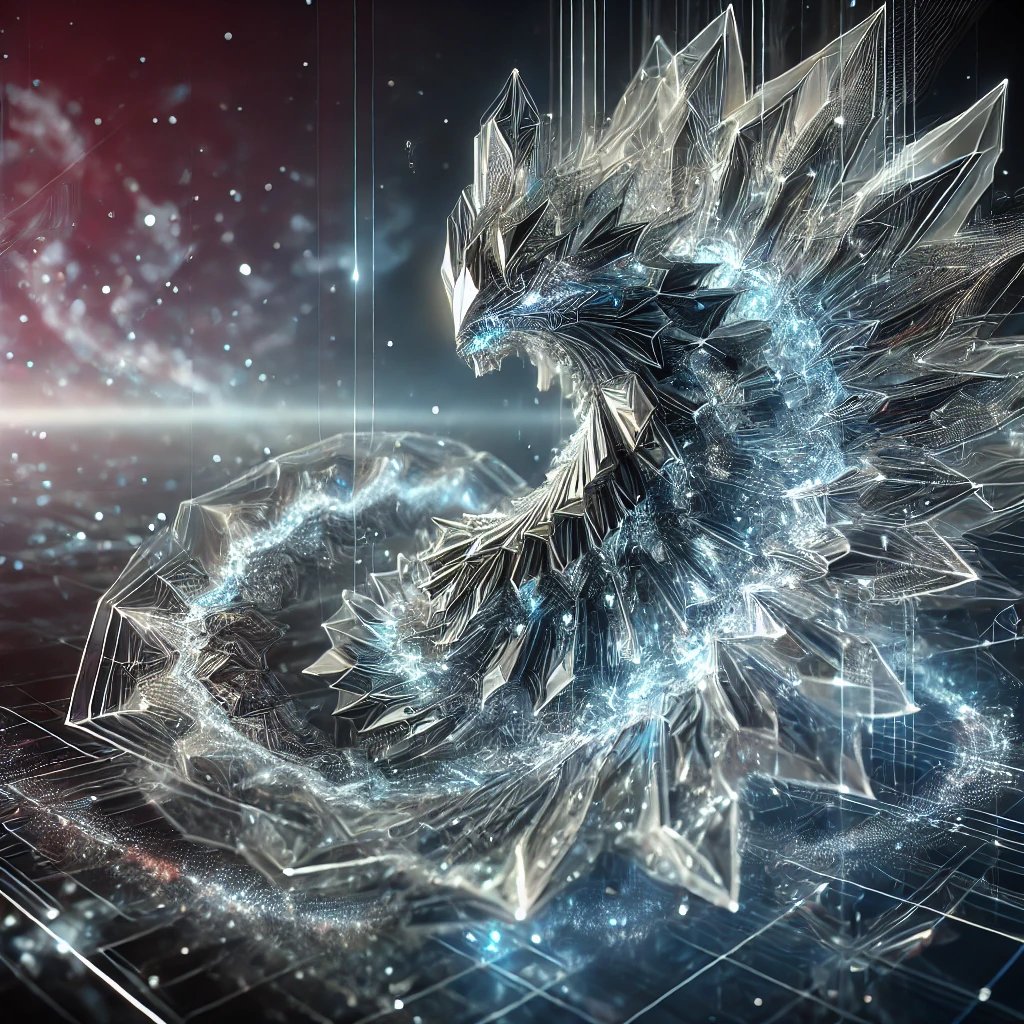
In recent years, digital art has become one of the fastest-developing creative fields. Virtual sculptures—works that exist exclusively in digital space—occupy a special place within it. These works have no physical form, yet they have already changed our understanding of contemporary art.
Virtual sculptures are objects created using digital technologies such as 3D modeling, virtual and augmented reality (VR/AR), and software for creating three-dimensional graphics. These works can be:
1. Accessibility and versatility Unlike physical artworks, virtual sculptures are not limited by geography. They can be shown anywhere in the world through the internet, augmented reality galleries, or virtual platforms. 2. Technical freedom Digital space gives artists limitless opportunities to experiment with form, texture, and scale. Sculptures can be weightless, multidimensional, or dynamically changing—things that are impossible in the physical world. 3. Environmental friendliness Creating virtual sculptures requires no physical materials, making the process more environmentally friendly than traditional methods. 4. Interactivity and engagement Augmented and virtual reality technologies allow viewers to interact with works and become part of them. For example, they can walk inside a sculpture, change its shape, or watch it transform in real time.
1. “Virtual Venus” Created using artificial intelligence algorithms, this digital sculpture presents a classical image of Venus supplemented by dynamic elements that change according to user data. 2. Refik Anadol's project The Turkish artist creates generative digital sculptures based on processing large datasets. His works are often projected onto building facades, transforming architecture into art. 3. Cyber sculptures in metaverses In virtual worlds such as Decentraland and The Sandbox, artists create three-dimensional sculptures that can be collected, sold, and exhibited in digital galleries.
Today, there are many ways to enjoy digital art:
Virtual sculptures open new horizons for artists and viewers. They challenge traditional ideas about what art is, where it can exist, and how people can interact with it. As technologies such as artificial intelligence, blockchain, and metaverses develop, this field will continue to grow, offering new forms of self-expression and perception.
Virtual art is more than a trend: it is a fully established part of contemporary culture that changes our understanding of art's possibilities. Sculptures that do not physically exist yet have enormous influence demonstrate that the boundaries of reality now lie only where our imagination draws them.