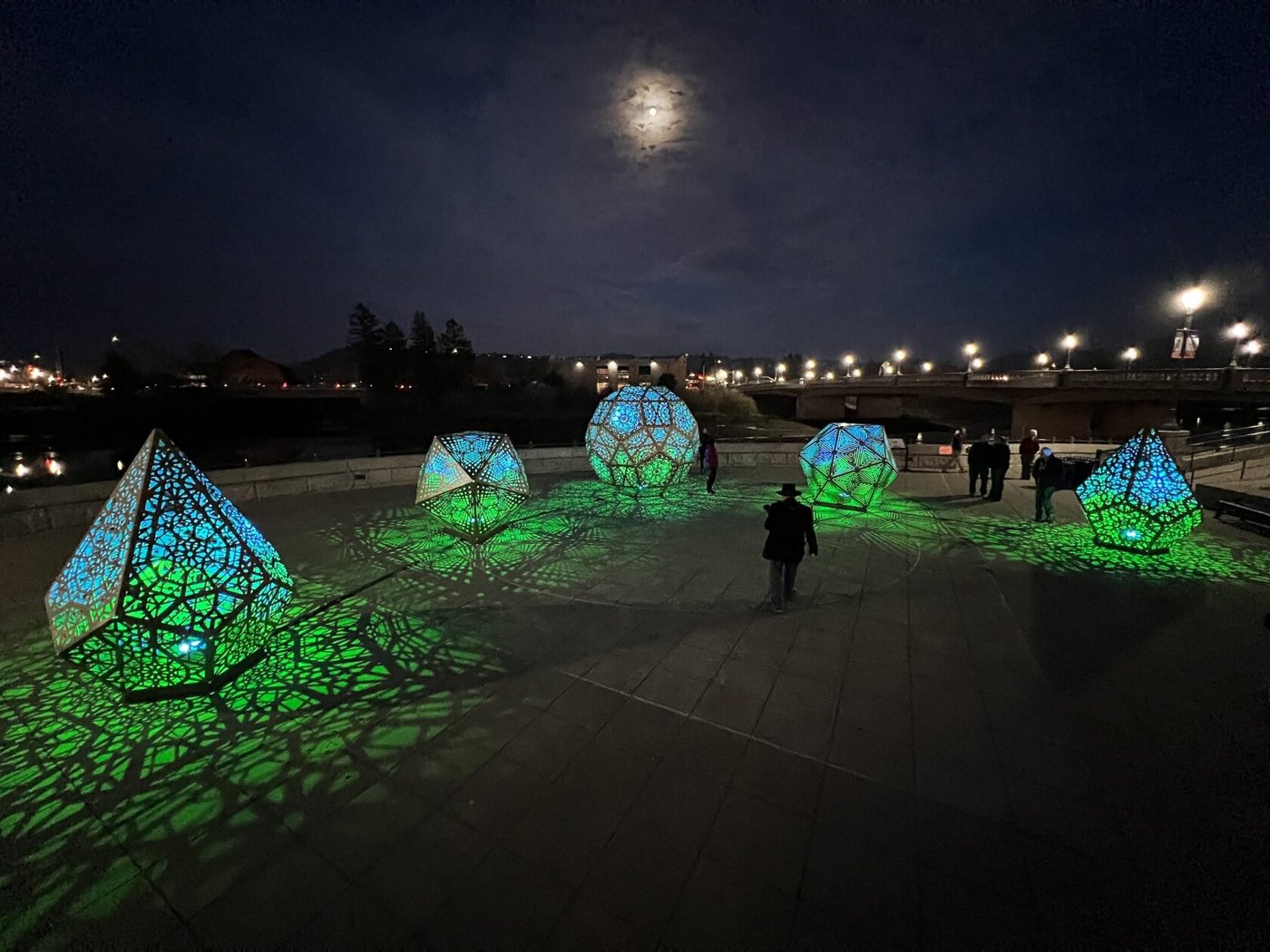
Architectural lighting for small architectural forms and art objects is a way not only to improve their appearance but also to emphasize their significance within a space. Lighting solutions help turn fountains, sculptures, pavilions, and other elements of urban design into visual focal points that attract residents and tourists. Let's explore how lighting changes the perception of architecture and what possibilities it offers.
01. Highlighting details 02. Well-designed lighting draws attention to forms and textures, highlighting an object's unique elements. This is particularly important for sculptures and fountains, where every detail plays a significant role. 03. Creating atmosphere 04. Lighting solutions shape the mood, from cozy and romantic to futuristic and dynamic. This influences how a space is perceived and how it functions. 05. Attracting attention 06. Illuminated objects become visual landmarks that attract attention even after dark. This makes them centers of urban life and points of attraction. 07. Improving safety 08. Lighting improves visibility on streets, in parks, and in public gardens, making evening walks safer. 09. Turning small architectural forms into art objects 10. Even simple small architectural forms, such as benches, bins, or pavilions, can become aesthetically significant elements through lighting design.
01. Outline lighting 02. Used to highlight an object's boundaries. Often applied to pavilions, bridges, and arches, emphasizing their silhouettes and giving them a striking appearance in the dark. 03. Accent lighting 04. Uses directional fixtures to draw attention to specific details: statues, carved elements, or a fountain's water jets. 05. Dynamic lighting 06. Changing colors and light intensity adds interactivity. Such solutions are particularly effective for fountains or contemporary installations. 07. Floodlighting 08. Uniform illumination creates a sense of monumentality and emphasizes the overall style. Suitable for large sculptures or memorial complexes. 09. Integrated lighting 10. Used in objects with transparent or translucent elements, such as glass or acrylic structures. Light from within creates a glowing effect.
01. Fountains 02. Illuminating water jets with RGB lighting adds dynamism and makes them a centerpiece of an evening park. 03. Sculptures 04. Accent lighting highlights details of the form, while soft floodlighting creates a sense of volume. Metal and glass sculptures look particularly striking. 05. Arches and bridges 06. Outline lighting makes them stand out in the cityscape, creating expressive silhouettes against the night sky. 07. Pavilions and gazebos 08. Local light fixtures inside and around the perimeter create a cozy atmosphere for evening gatherings. 09. Interactive art objects 10. Lighting with changing colors and effects adds dynamism to contemporary sculptures and turns them into elements of public interaction.
For Belarusian cities, architectural lighting plays an important role in creating a contemporary urban environment. Light installations on Independence Square in Minsk, illuminated fountains in parks, and sculptural compositions in regional centers all make spaces more aesthetic and attractive.
Lighting is particularly important for small architectural forms in public places such as public gardens, residential neighborhoods, or business entrance areas. It transforms them from utilitarian objects into works of art, emphasizing their uniqueness and modernity. With growing attention to tourism appeal, such solutions help distinguish Belarus on the map of contemporary, comfortable cities.
1. Define the goal 2. Do you want to highlight details, create a dynamic effect, or draw attention to an object from a distance? This influences the choice of lighting type. 3. Consider the object's material 4. Solutions that use reflections suit metal, soft light suits stone, and integrated lighting elements suit glass and acrylic. 5. Plan the color palette 6. Neutral white light suits classical objects, while colored lighting looks better on contemporary installations. 7. Consider energy consumption 8. Using LED solutions will reduce electricity costs and environmental impact.
Lighting for small architectural forms and art objects is more than illumination: it is a way to give them new meaning and artistic value. Through light, even the simplest objects can become striking landmarks and focal points of a space. For Belarus, such solutions play an important role in creating contemporary, aesthetically appealing cities and parks that delight residents and attract tourists.